My Store
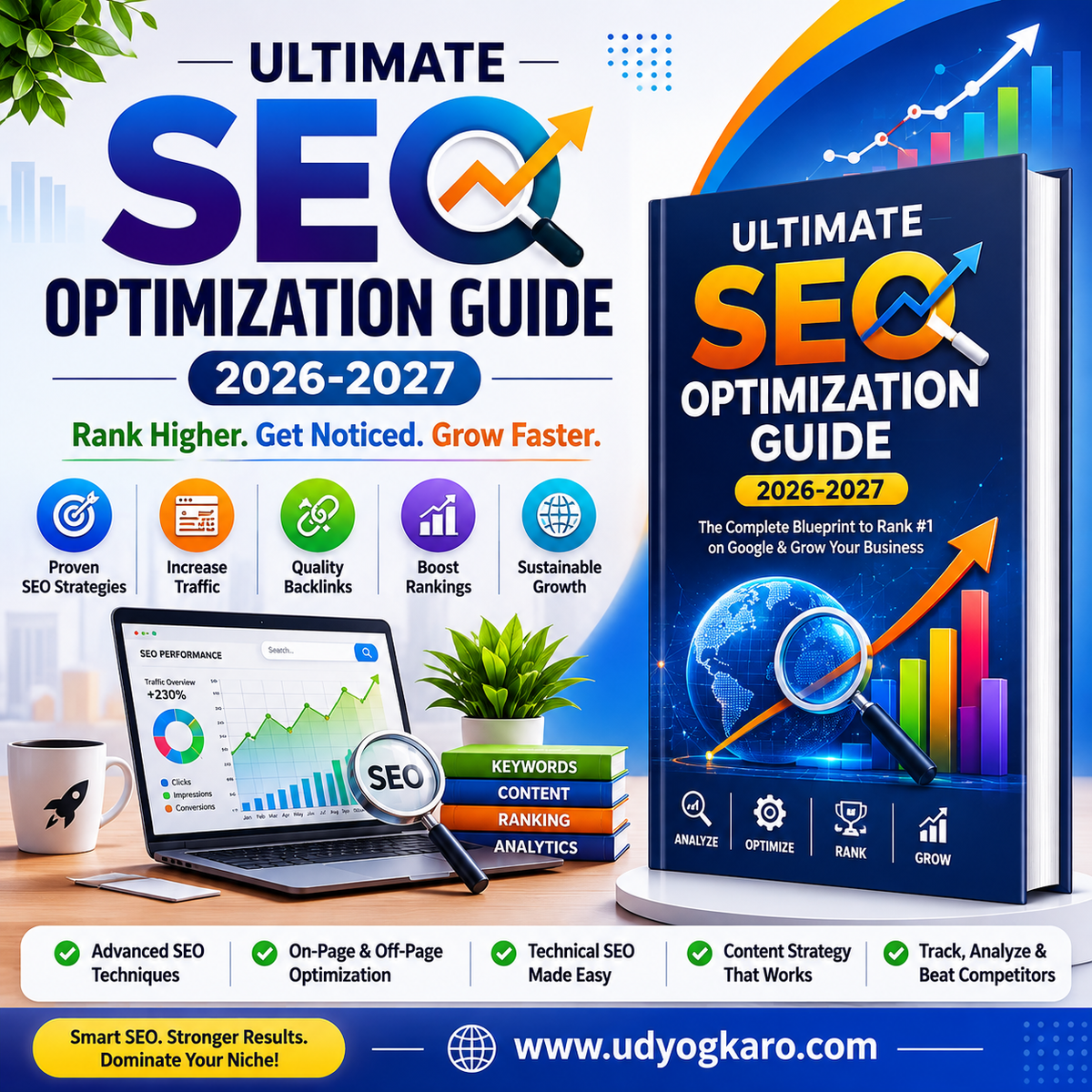
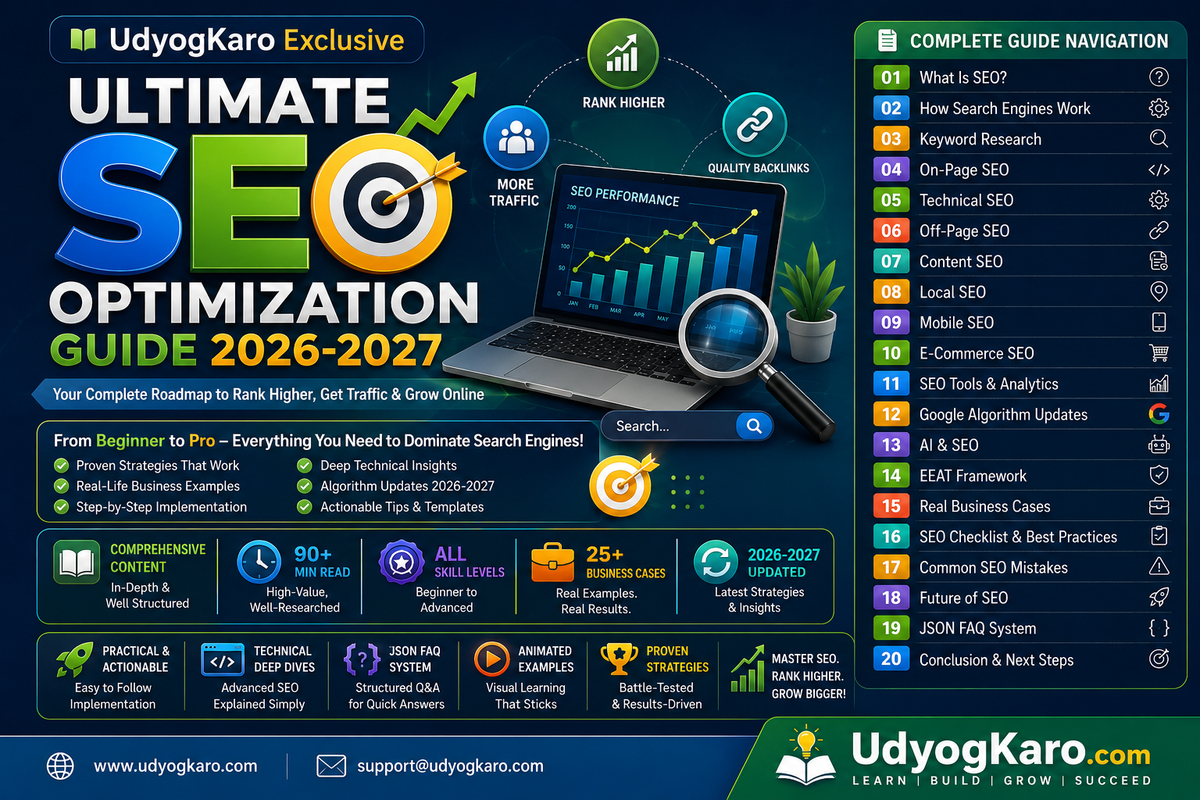
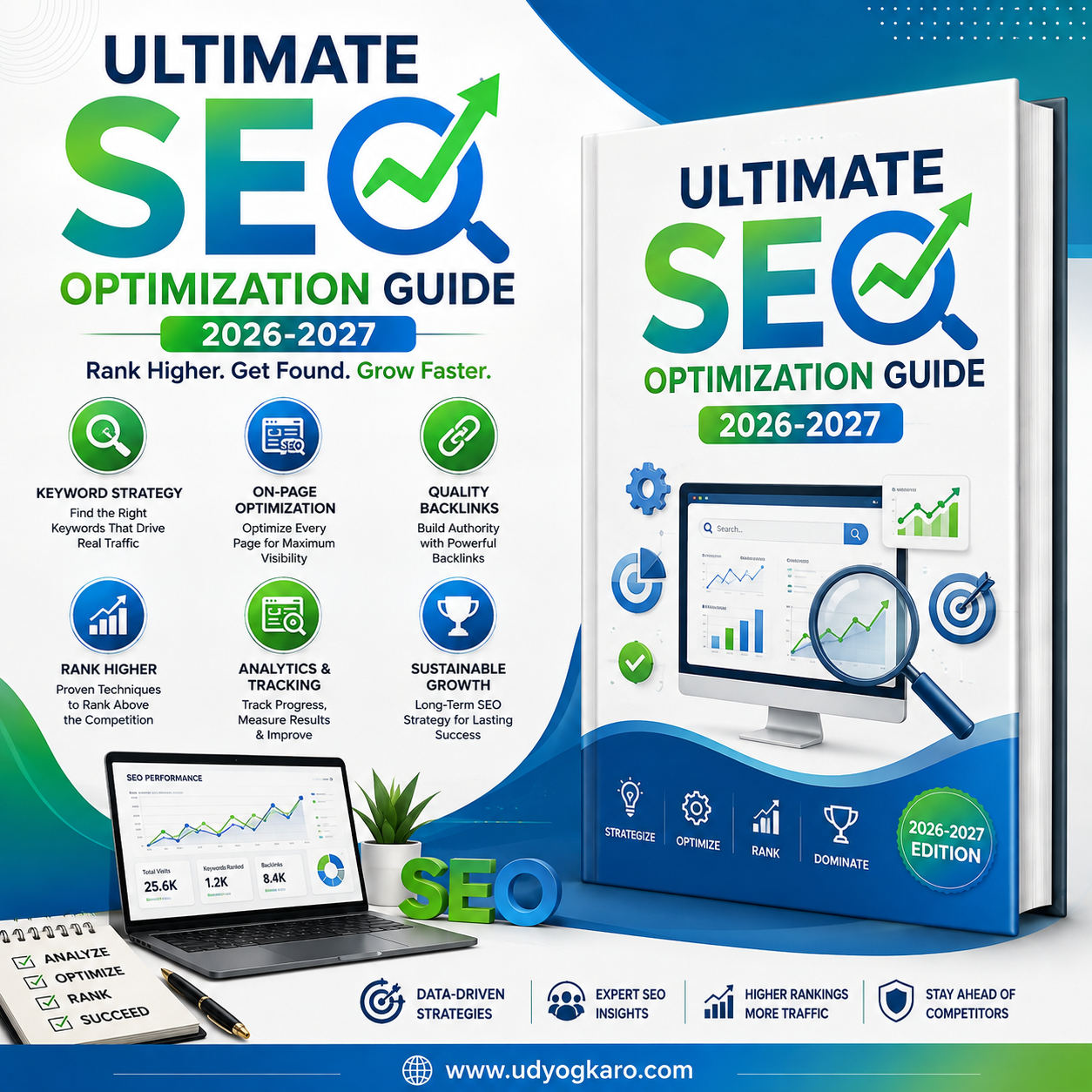
ULTIMATE SEO OPTIMIZATION GUIDE 2026-2027
ULTIMATE SEO OPTIMIZATION GUIDE 2026-2027
Couldn't load pickup availability
SEO Optimization Guide 2026–2027: The Complete Modern SEO Playbook
Master Modern SEO in the AI-Driven Search Era
The Complete SEO Optimization Guide for Google, AI Search & the Future of Organic Traffic
SEO is no longer just about inserting keywords into articles and building backlinks.
Search is evolving.
Google is becoming increasingly AI-driven. Users are searching through conversational interfaces. AI platforms are changing how people discover websites, products, businesses, and information.
That means the old SEO playbook isn't enough.
You need a modern strategy that combines traditional search engine optimization with AI search optimization, topical authority, semantic relevance, technical performance, content quality, and digital trust.
That's exactly what this SEO Optimization Guide 2026–2027 is designed to help you achieve.
What Is the SEO Optimization Guide 2026–2027?
The SEO Optimization Guide 2026–2027 is a practical, comprehensive digital playbook for anyone who wants to improve organic search visibility and build a stronger presence across Google and AI-powered search experiences.
Instead of focusing on outdated SEO shortcuts, this guide focuses on the fundamentals that matter:
Search Intent + Helpful Content + Topical Authority + Technical SEO + Trust + AI Visibility + Conversion Optimization
You'll learn how these elements work together to create an SEO strategy capable of generating sustainable organic visibility.
Why Traditional SEO Isn't Enough Anymore
Search Has Changed. Your SEO Strategy Must Change With It.
For years, SEO revolved around a relatively simple formula:
Find a keyword → publish content → build backlinks → rank → receive clicks.
Today's search environment is more complicated.
Search engines can understand entities, relationships, context, intent, and content quality at a much deeper level.
At the same time, AI-powered search experiences can summarize information and provide users with answers without requiring them to visit multiple websites.
This creates a new SEO challenge:
How do you become visible when users aren't always clicking traditional search results?
The answer is to optimize for search visibility, not simply rankings.
What You'll Learn Inside
1. Advanced Keyword Research
Discover how to move beyond basic keyword volume and identify keywords based on:
- Search intent
- Commercial value
- Competition
- Relevance
- Long-tail opportunities
- Semantic relationships
- Topic clusters
- Buyer journey
- Content gaps
Learn how to identify keywords that can attract qualified visitors instead of meaningless traffic.
2. Search Intent Optimization
Ranking for the wrong keyword is not an SEO victory.
Learn how to identify whether a search is:
- Informational
- Navigational
- Commercial
- Transactional
- Local
- Comparative
Then create content that satisfies the actual reason behind the search.
3. On-Page SEO
Learn how to optimize the elements that search engines and users rely on to understand your content.
You'll explore:
- SEO titles
- Meta descriptions
- H1–H6 headings
- URL structure
- Keyword placement
- Semantic keywords
- Image optimization
- Alt text
- Internal links
- Content structure
- Content readability
- Conversion elements
4. Technical SEO
Great content cannot perform at its full potential if search engines cannot properly crawl, understand, or index your website.
Learn the fundamentals of:
- Crawling
- Indexing
- XML sitemaps
- Robots.txt
- Canonical URLs
- Redirects
- Structured data
- Mobile optimization
- Website architecture
- JavaScript SEO
- Core Web Vitals
- Page experience
Build a technically stronger website from the ground up.
5. Topical Authority & Content Clusters
One article rarely establishes authority around an entire subject.
Learn how to build topic clusters that connect related content around a central pillar page.
Example:
Pillar Topic:
SEO Optimization
Supporting Topics:
- Keyword Research
- Technical SEO
- On-Page SEO
- Link Building
- Local SEO
- E-commerce SEO
- Content SEO
- AI SEO
- SEO Analytics
This structure helps create a deeper, more comprehensive resource ecosystem.
6. Semantic SEO & Entity Optimization
Modern search engines don't simply match individual keywords.
They increasingly interpret the meaning, context, relationships, and entities surrounding a topic.
Learn how to create content that demonstrates:
- Topical depth
- Contextual relevance
- Entity relationships
- Semantic coverage
- Expertise
- Authority
- Trust
The objective is simple:
Help search engines understand exactly what your website is about—and why it deserves visibility.
7. AI Search Optimization
The rise of AI-powered search creates a new opportunity for publishers and businesses.
Learn how to optimize content for AI-driven discovery by focusing on:
- Clear factual answers
- Strong topical coverage
- Structured information
- First-hand expertise
- Author credibility
- Citability
- Entity clarity
- Consistent brand information
- Authoritative references
The goal isn't to "hack" AI systems.
The goal is to create information that is useful, understandable, trustworthy, and easy for search and AI systems to identify and reference.
8. Google AI Overview Optimization
Traditional rankings are only one part of modern search visibility.
Learn practical principles for creating content that can compete for visibility within AI-generated search experiences.
You'll discover how to structure information using:
- Direct answers
- Clear headings
- Concise explanations
- Supporting evidence
- Comprehensive topic coverage
- Question-based sections
- Structured content
9. LLM Citation & AI Visibility
AI platforms can become another discovery channel for your brand.
This guide introduces strategies for improving your LLM visibility and citation potential, including:
- Building recognizable entities
- Publishing authoritative information
- Maintaining consistent brand data
- Creating citation-worthy resources
- Developing original research
- Demonstrating expertise
- Earning mentions across reputable websites
- Strengthening digital authority
Think beyond:
"How do I rank on Google?"
Start asking:
"How do I become a trusted source across search and AI discovery?"
10. Link Building That Actually Builds Authority
Backlinks still matter—but not every backlink is valuable.
Learn how to develop sustainable link acquisition strategies through:
- Digital PR
- Resource pages
- Expert contributions
- Original research
- Data-driven content
- Industry publications
- Strategic partnerships
- Link-worthy assets
Focus on relevance, authority, editorial value, and trust rather than simply collecting thousands of links.
11. Local SEO
Want customers to find your business locally?
Learn how to strengthen local search visibility through:
- Google Business Profile optimization
- Local keyword research
- Location pages
- Reviews
- Local citations
- NAP consistency
- Local content
- Internal linking
- Local authority signals
Turn local searches into real-world customers.
12. E-commerce SEO
For online stores, organic search can become a powerful acquisition channel.
Learn how to optimize:
- Product pages
- Category pages
- Product descriptions
- Internal links
- Faceted navigation
- Product schema
- Commercial keywords
- Comparison content
- Buying guides
- Informational content
Build an SEO funnel that supports customers from discovery to purchase.
13. SEO Content Strategy
Publishing more content isn't necessarily the answer.
Publishing better, more strategically connected content is.
Learn how to develop a content strategy based on:
Audience → Search Demand → Intent → Topics → Content → Authority → Conversion
You'll discover how to identify content opportunities, prioritize topics, update existing pages, and build an SEO content engine.
14. SEO Audits & Optimization
Learn how to identify what's preventing a website from reaching its organic potential.
Your SEO audit framework can cover:
- Technical problems
- Indexing issues
- Content gaps
- Keyword cannibalization
- Internal linking
- Backlink profiles
- User experience
- Page performance
- Search intent
- Conversion opportunities
Find the problems.
Prioritize them.
Fix what matters most.
Measure the results.
15. SEO Analytics & Performance Tracking
SEO without measurement becomes guesswork.
Learn how to monitor meaningful metrics such as:
- Organic traffic
- Search impressions
- Click-through rate
- Keyword visibility
- Conversions
- Revenue
- Landing-page performance
- Engagement
- Backlinks
- Indexed pages
- Content performance
Focus on business outcomes—not vanity metrics.
Who Is This SEO Guide For?
This guide is built for:
Bloggers & Content Creators
Build organic traffic and develop authority around your niche.
Website Owners
Increase visibility and attract more qualified visitors.
Entrepreneurs
Build sustainable organic acquisition channels.
E-commerce Businesses
Generate more product discovery and purchase-intent traffic.
Local Businesses
Improve visibility for location-based searches.
Affiliate Marketers
Build topical authority and target valuable search demand.
Digital Marketing Agencies
Develop a modern SEO framework for clients.
SEO Professionals
Update existing strategies for the AI-search era.
Students & Beginners
Build a strong foundation in modern search engine optimization.
What Makes This Guide Different?
No Magic Tricks. No Guaranteed Rankings. No Outdated Hacks.
SEO doesn't have a secret button that guarantees the #1 position.
There is no legitimate shortcut that works forever.
Instead, this guide focuses on repeatable systems and strategic principles.
You'll learn how to:
Research → Plan → Create → Optimize → Build Authority → Measure → Improve
That process can be applied to blogs, business websites, e-commerce stores, local businesses, SaaS websites, affiliate projects, and more.
The Modern SEO Framework
The 7 Pillars of SEO Success
1. Search Intent
Understand what users actually want.
2. Content Quality
Create genuinely useful resources.
3. Topical Authority
Demonstrate comprehensive expertise.
4. Technical Excellence
Make your website accessible to search engines and users.
5. Authority & Trust
Earn credible mentions, links, and recognition.
6. AI Visibility
Create content that is understandable and potentially useful within AI-powered discovery.
7. Conversion Optimization
Turn organic visibility into measurable business results.
Your SEO Transformation Starts Here
You don't need to chase every Google update.
You don't need to publish hundreds of random articles.
You don't need thousands of low-quality backlinks.
You need a system.
A system that helps you understand what people search for, create the best possible answers, establish authority, optimize your website, and continuously improve performance.
That's what this SEO Optimization Guide 2026–2027 is built to provide.
Stop Guessing. Start Ranking.
The future of search belongs to websites that provide useful information, demonstrate genuine expertise, establish authority, and create experiences users can trust.
Don't build your SEO strategy around yesterday's search engine.
Build it for Google, AI-powered search, and the evolving discovery ecosystem.
Get the SEO Optimization Guide 2026–2027 and build your modern SEO strategy today.
Research smarter. Create better. Build authority. Increase visibility. Grow organically.
Frequently Asked Questions
What is an SEO Optimization Guide?
An SEO Optimization Guide is a practical resource that explains how to improve a website's visibility in search engines. It typically covers keyword research, on-page SEO, technical SEO, content optimization, link building, search intent, analytics, and other ranking factors.
What is SEO in 2026–2027?
SEO in 2026–2027 involves optimizing websites for traditional search results as well as increasingly AI-driven discovery experiences. Modern SEO emphasizes helpful content, search intent, topical authority, technical performance, trust, structured information, and strong user experiences.
Is SEO still important with AI search?
Yes. AI search changes how users discover information, but websites still need strong content, technical foundations, authority, and recognizable entities to compete for visibility across modern search experiences.
How do I rank higher on Google?
There is no guaranteed formula for a specific ranking position. A strong SEO strategy generally combines relevant content, search-intent alignment, technical SEO, topical authority, internal linking, credible authority signals, good user experience, and continuous measurement and improvement.
What is AI SEO?
AI SEO refers to strategies designed to improve a website's visibility and discoverability within AI-powered search and answer experiences, while also supporting traditional search engine optimization.
What is Google AI Overview optimization?
Google AI Overview optimization focuses on creating clear, useful, authoritative, well-structured content that can effectively satisfy user questions and be understood by Google's search systems.
What is topical authority in SEO?
Topical authority is the depth and breadth of a website's useful coverage of a particular subject. Building interconnected, comprehensive content around a topic can help establish stronger relevance and expertise.
Are backlinks still important for SEO?
Backlinks can remain an important authority signal, but quality and relevance matter more than simply accumulating large numbers of links. Sustainable link building focuses on earning valuable, editorially relevant references.
How long does SEO take to work?
SEO results vary significantly based on competition, website history, content quality, technical condition, authority, industry, and search demand. SEO should generally be treated as a long-term growth strategy rather than an overnight traffic tactic.
Can beginners learn SEO?
Absolutely. Beginners can learn SEO by starting with search intent, keyword research, content optimization, technical fundamentals, internal linking, analytics, and progressively more advanced concepts such as topical authority and AI search optimization.
Final SEO Call to Action
Your Competitors Are Already Optimizing.
The question isn't whether search will change.
It will.
The question is whether your website will change with it.
Start building your 2026–2027 SEO strategy today.
SEO Optimization Guide 2026–2027
Stop Guessing. Start Ranking. Dominate Search.